

Skip to product information


The new edition retains the character of its predecessor. It is a fully reflex paramotor wing that combines enjoyable flying with a high collapse resistance.
It performs very well in all types of powered flights and is suitable for both beginner and intermediate
pilots. It is also highly valued by paramotor training schools. Based on the successful design of the first version, we have focused on improving launch behavior and enhancing overall usability and ergonomic.
Key features of Solo 2:
• easier launches,
• 3-line design,
• lower power requirement,
• simpler and more intuitive risers with trimmers and the TST system,
• more natural feel in free flight,
• EN certification for PG weight ranges.
The design improvements have also enhanced the wing’s passive safety to the point that we decided to obtain EN-B certification for free-flight (PG) weight ranges, with trimmers set in the closed position. Achieving EN-B certification will make it easier to use this wing at flight schools in countries that require it.
Design
- The canopy has been designed in our CSG system (Canopy Shape Guard), which consists of several subsystems guaranteeing exceptional coherence of the canopy shape and its extended durability.
- Adjustable reflex airfoil of the paraglider is based on our flagship DRA concept (Dudek Reflex Airfoil), duly optimized using special CFD software.
- The intakes of Shark-nose technology
- The Solo is made with the Flexi-Egde technology – the precise shape of the leading edge is kept with laminated cloth reinforcements, incorporating synthetic rods. These rods considerably improve launch quality, as well as keep deformations away at high speeds.
- Careful selection of modern fabrics and design solutions brings about maximum reliability, strength and durability. All materials come from numbered production batches, and each production step can be verified down to identification of specific worker and controller.
The Solo is manufactured in technology utilizing precision of the laser cutter. All stages of production process take place in Poland under strict supervision of the designer himself, thus ensuring highest European quality.
Design solutions, technologies and other functionalities are listed below in the Technologies section.
Parameters
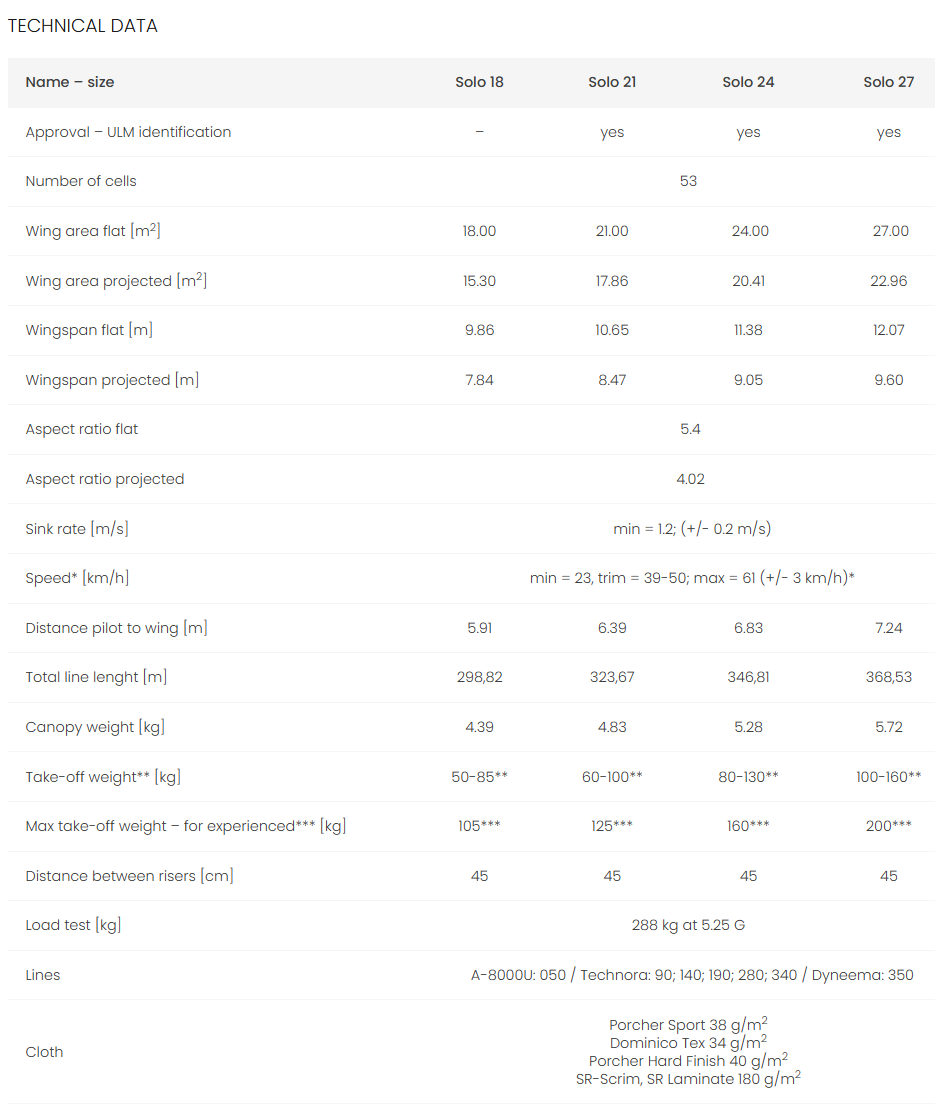
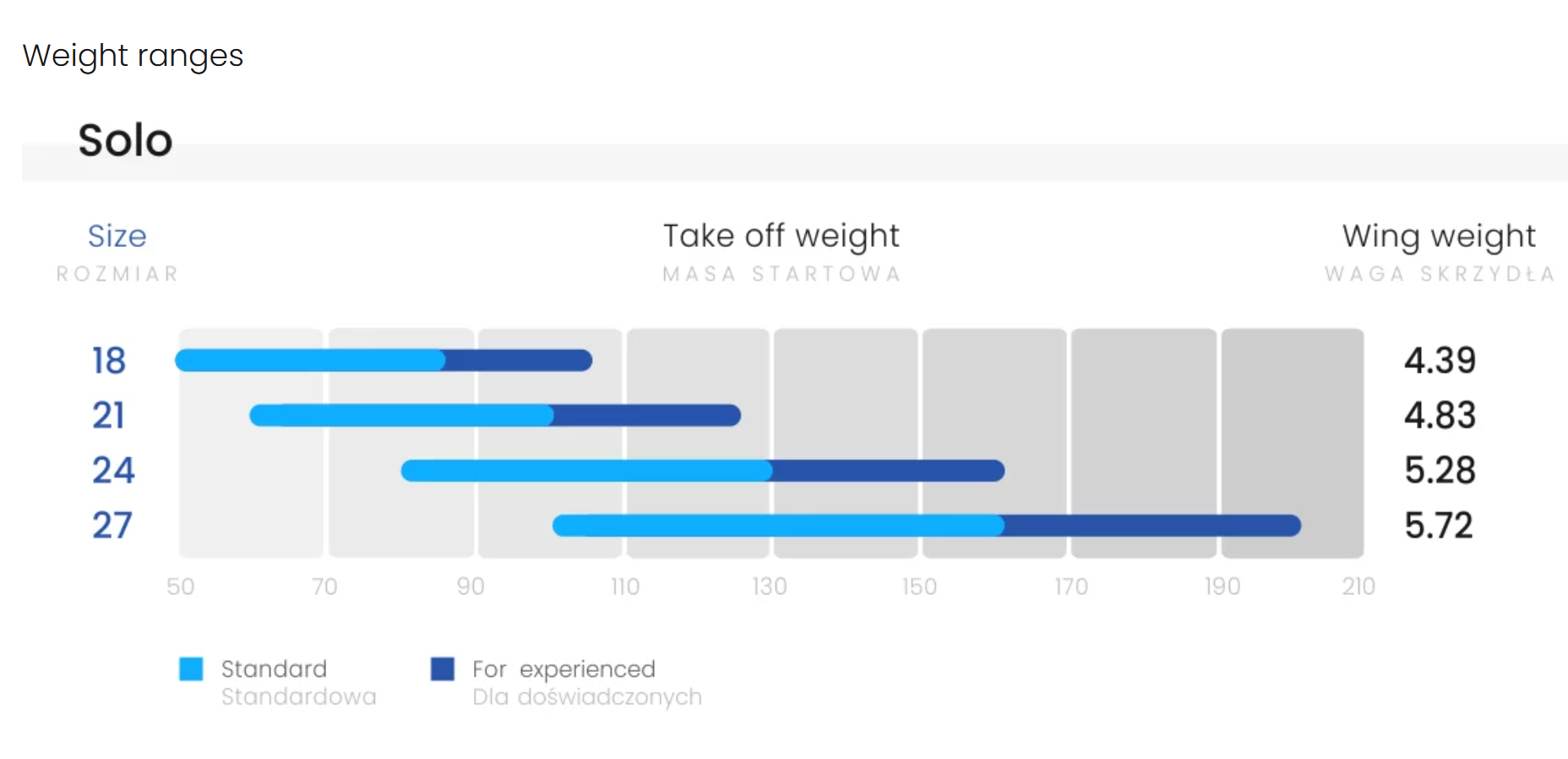
* Speeds are given as estimated for the middle wing size and the middle of its weight range. These speeds can vary within +/- 3 km / h depending on the size, take-off weight and additional factors such as air pressure and temperature.
** The basic rule is to choose the size of the wing so that the take-off weight is in the middle of the weight range. Less weight on the wing (lower range take-off weight) can be considered for foot take-off, when flying in calmer conditions, or when we want to improve economy. More experienced pilots who want to fly dynamically, have higher speed and fly in more demanding wind conditions can consider greater wing loading (take-off weight in the upper range). This is a common option among trike users.
*** Note – the canopy significantly changes its behavior with increasing wing loading. The greater the loads, the greater skill and concentration of the pilot are required.
Colours

£3,662.00
